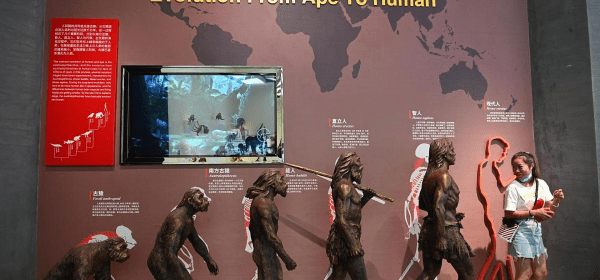
China: Landmark “Transitional” Human Evolution Fossil Found! (8.12.2024)

The foot metatarsal bone found this year is the only one unearthed in China, and it could provide important information in studying both how the ancients walked and their height, Wu said.

In addition, the finely crafted stone tools found at Hualongdong show the relatively high technical level of the Hualongdong cave people 300,000 years ago. They were very intelligent, and had evolved towards the stage of Homo sapiens, according to Wu.

“The Hualongdong humans were the earliest ancient humans in East Asia who exhibited the most characteristics of Homo sapiens, and were at a key turning point in the evolution from ancient humans towards modern humans. The Hualongdong site will provide a wealth of information on how modern humans evolved,” said Liu Wu, another researcher with the IVPP, who has conducted excavations at the site for more than a decade.
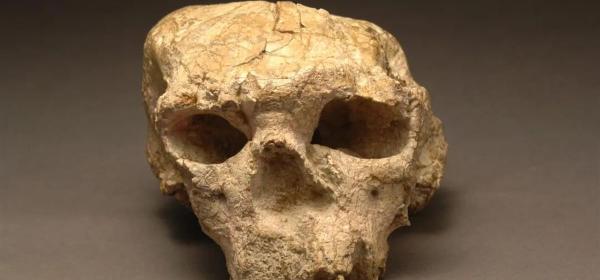
New ‘Third’ Fossilized Skull of “Yunxian Man” (Homo Erectus) Found in Central China! (29.9.2022)

In 1989 and 1990, the first and second such skulls, dating from 800,000 to 1.1 million years ago, were unearthed at an early Paleolithic period site in central China’s Hubei Province. The fossil skulls are believed to belong to Homo Erectus and were named “Yunxian Man.”

The new fossil, named “No. 3 Skull of Yunxian Man,” was discovered about 35 meters from the excavation location of the first two skull fossils, with similarities in terms of burial environment and the technical characteristics of their companion stone artifacts.

Archaeologists have carried out systematic excavations at the site since 2021, which led to the new discovery. Part of the new skull has been unearthed, with no obvious deformation visible so far.

Experts said that the new discovery will provide important evidence showing the evolution of Homo Erectus and its origin and development in China and East Asia.