Author’s Note: Some years ago, I wrote a published article about Hakka Chinese martial arts as commonly viewed through the filter of traditional Hakka Chinese

Proletariat Blogging in the Heart of (UK) Predatory Capitalism! Exploring the Interface between Matter and Perception, Chinese Buddhism, Daoism, Hakka Ethnography, and All Aspects of Radical Politics, History, Psychology and Philosophy – 全世界无产者联合起来!
Author’s Note: Some years ago, I wrote a published article about Hakka Chinese martial arts as commonly viewed through the filter of traditional Hakka Chinese
The enemy will either have to traverse the deep moat, or circumnavigate its boundary whilst continuously receiving incoming fire from Hakka archers safely ensconced within the fortified structure.
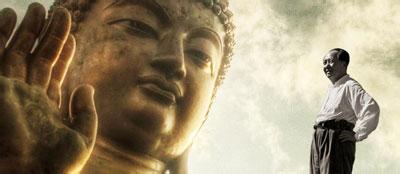
Dear Waiman I was reading a Chinese language article about Mao Zedong’s association with Hakka culture. I might translate this later this evening. However, in
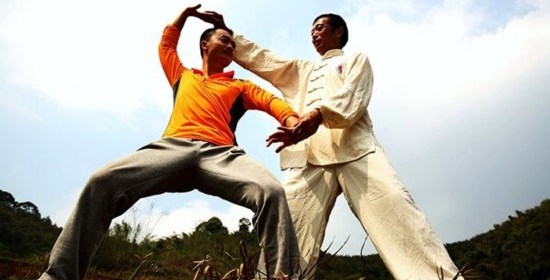
When I wrote my Hakka martial arts article, I had communicated with a number of Mainland Hakka gongfu masters who all told me the same story – namely that their arts originated in Northern China. This is exactly what Master Chan had told me, and it seems to be a Western myth encouraged by ignorance of the subject matter, that suggests that Hakka martial arts originated in the South.
As the legs sink into the earth, the ox bends the knee and extracts the limb – this is the squat-kick, and as the broad back carries the plough and the farmer – this is the back-raise of the gongfu practitioner. Finally, for many Hakka gongfu practitioners, standing in ‘Horse Stance’ (馬步 – Ma Bu) is actually holding the ‘Ox Stance’ (牛步 – Niu Bu).
This bond between the Hakka and their Northern Chinese ancestors is considered a defining Hakka characteristic. So much so that even when Hakka people moved out of China and into foreign lands, when they married non-Hakkas, these outside people were taken back to the old ancestral hall to ritualistically pay their respects to the Hakka ancestors of their spouse, and in so doing, become ‘Hakka’ themselves. This cultural solidarity may well explain why wherever Hakka people have gone, they have brought success to their new countries. As China is affluent and peaceful today, the Hakka people are no longer under threat from attack. They are now legally acknowledged as ‘Han’ people living in the south, and many younger Hakkas have moved out of the round houses, which are now mostly occupied by the elder generation.
 SANGHA KOMMUNE (SSR)