A Saturday Morning Trip to the Honey-Shop!

The Galmpton “Honour System” – Walking to the Honey-Shop on a Saturday Morning! (30.8.2025)

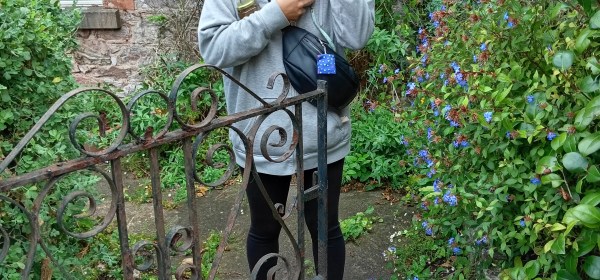
Having stayed in Galampton a number of times now – my parent’s house is full of various medical paraphernalia – we noticed a sign (one of many) outside a beautiful brick-work #(chocolate-box) cottage – advertising local honey. Although this sign is a permanent fixture, we were never quite sure if the honey is available all year round – and we did not want to bother the owners. I could just imagine a startled villager as their sedate and isolated cottage is over-ran by a loud South London family – and their two-dogs!

Galmpton Art Exhibition! (24.8.2025)

The local people are polite and inquisitive as the place is linked to Agatha Christie and during the Summer months they get hundreds of international visitors. The place is old, pretty and quaint. As this was the last day of the Exhibition – we thought we should go! The following videos allow you to experience our journey as if you are part of group! This a more conventional art exhibition – avoiding the modern variety – which tries to convince us that a White square on a white background constitutes “art”! Luckily, this type of of nonsense has not yet permeated it’s way to Galmpton!

Zen of Galmpton! (24.8.2035)

Here we are. Zen is Ch’an in reverse – which is good as perception is the wrong way around. Turn it the right way around – and Zen becomes Ch’an the right way around. Not always an easy task – like catching a steam train whilst it is obscured by it’s own smoke. What a joy such contradictions are. They exist to test our perception and determination. As such, nothing else matters. We all look up – and we all look down – just like every koan (gong-an) you may have viewed. Still, none of it matters if you cannot lay it all down. None of it matters at all.

Steam Train Travelling Through Galmpton!

UK: Galmpton Sheep & Steam Train! (15.4.2025)

I also remember a “93” double-decker bus in Dartmouth. Why? well, in Sutton – where we live – the “93” TFL bus begins in Priory Road (travelling to Putney Bridge) – we used to live in Priory Road from 1998-2004. We now live one or two streets away – but still near this bus route. This bus travels via Wimbledon Common – near to where the Buddhapadipa Buddhist Temple is located. Believe it or not – there is a Buddhist Temple near Honiton in Devon (Upottery) – the Hartridge Buddhist Monastery. We have visited this place many years ago – and might well visit again sometime soon.

King Arthur May Well Have Been a Historical Personage!

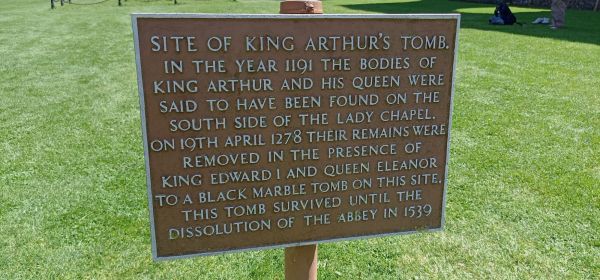
Glastonbury Abbey – King Arthur’s Grave! (29.7.2024)

The Celtic Church (from Egypt) was probably in Britain from the 2nd century CE onwards – with it being destroyed by the incoming Roman Catholic Church by the 11th century CE. Its monastic nature encouraged not only cloistered monks who lived in draughty stone cells – but also Hermits who lived in natural caves or various other meditation cells. Celtic Christianity did not persecute – but encouraged and accommodated the Pagan beliefs of indigenous people. There was a mutual respect between both groups of believers and this explains why leaders like King Arthur would strive to protect the Church – and the Church to honour him in death. This type of Asiatic respect does not require a slavish attachment to belief to be functional. Freedom of belief equates to respect for difference. There are many theories dating King Arthur from the 6th, 7th and 8th centuries, etc, which include many geographical areas associated with his life and death. We favour Tintagel in Cornwall – a place we have visited many times. King Arthur was a wise man, a compassionate man, and a great warrior!

Inside the Castle!

Torbay: Berry Pomeroy Castle – Tudor Ruins! (2.4.2024)

During the 1500s, Elizabeth I was an absolute monarch (as was her father – King Henry VIII) – who preferred to live in and around the Nonsuch Park area – including Hampton Court Palace (which is no longer used by the royal family). However, there was once a “Nonsuch Palace” which does not exist today. After Elizabeth I died (1603 CE) – many of the castles she frequented were no long favoured by the royal family – leading to these buildings falling into neglect and ruin. This was the case with Nonsuch Palace which was so badly dilapidate that what was left of it had to be demolished in 1683 CE – for safety reasons – with the ruins being recycled into the constructon (or maintenance) of local buildings.

1 2