Lunar Magnetic Field

China: Chang’e 6 Samples Shed Light on Lunar Magnetism! (23.12.2024)

They discovered that the Moon’s magnetic field may have experienced a rebound around 2.8 billion years ago, suggesting that the Moon’s generator may have been reinforced after an early sharp decline.

“The reason for this rebound could be a change in the primary energy source of the generator or a restrengthening of the initial driving mechanism,” Cai said.

“The data fill in a billion-year gap in the evolution of the lunar paleomagnetic record and provide the first paleomagnetic measurements from the lunar far side,” a reviewer for the journal Nature said. “The authors are to be congratulated on a historic study that provides a major advance in our understanding of lunar magnetism.”

The evolution history of the Moon’s magnetic field is markedly different from that of the Earth’s, the research team said.

Evolutionary Development Mapped!

China: Scientists Uncover Mysteries of Early Life Evolution on Earth! (20.12.2024)

The research has revealed that life’s evolution from simple to complex in about 1.5 billion years is not a linear process but a pattern of alternating long-term stagnation and relatively rapid growth.

The results also highlighted the profound effects of sudden environmental shifts, such as temperature and oxygen level, on early complex life, offering crucial implications for studying alien life in harsh conditions and evaluating the future habitability of Earth, said Tang Qing from Nanjing University, the first author and one of the corresponding authors of the paper.

A peer-reviewer praised the work as “a long overdue paper to examine the fossil record of the Proterozoic,” which will make for “a plethora of papers following [its] publication.”

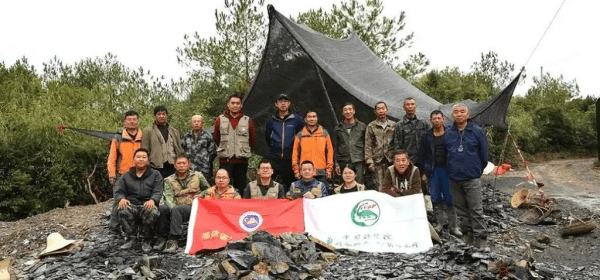
China: Landmark “Transitional” Human Evolution Fossil Found! (8.12.2024)

The foot metatarsal bone found this year is the only one unearthed in China, and it could provide important information in studying both how the ancients walked and their height, Wu said.

In addition, the finely crafted stone tools found at Hualongdong show the relatively high technical level of the Hualongdong cave people 300,000 years ago. They were very intelligent, and had evolved towards the stage of Homo sapiens, according to Wu.

“The Hualongdong humans were the earliest ancient humans in East Asia who exhibited the most characteristics of Homo sapiens, and were at a key turning point in the evolution from ancient humans towards modern humans. The Hualongdong site will provide a wealth of information on how modern humans evolved,” said Liu Wu, another researcher with the IVPP, who has conducted excavations at the site for more than a decade.

Robot Beijing Marathon

China: Android Runs Complete Half-Marathon! (16.11.2024)

Human performances varies across a considerable scale – whilst Socialist ideology emphasises “effort” whilst also recognising a natural “achievement” at the high-end of performance that does not leave the bulk of humanity behind. Human performance must exist on a scale that allows an “average” ability in real life that ensures the survival of the human race. Migratory humans used to “walk” thousands of miles whilst following the good weather and the shifting herds. All humans, men, women and children, as well as the young, old, and ill, would participate in these massive migrations – with the lower speed ensuring the greater survival rate over-all. Yes – those who could run fast over long or short distances had their place – but such abilities were considered peripheral to the needs of tribal survival.

Shrub Ox Evolved Outside North America!

China: North American Shrub Ox Fossils Discovered in Eurasia! (24.10.2024)

Phylogenetic studies show that shrub oxen formed a sister group with musk oxen, indicating a closer evolutionary relationship between the two compared to other bovidae. 

“Building on previous research, we expanded our study to include Quaternary musk oxen and concluded that their evolution can indeed be divided into two groups: high-horned and low-horned species. These two groups migrated from Eurasia to North America during the Late Early Pleistocene to Early Middle Pleistocene, and the Late Middle Pleistocene, respectively,” Bai stated.

This research provides new material on the diversity and evolution of musk oxen and is significant for understanding faunal exchanges between Eurasia and North America during the Quaternary period.

Moon South Pole Samples!

China: Researchers Reveal Chang’e-6 Lunar Samples Composition! (18.9.2024)

The Chang’e-6 mission, however, marks the first time humanity has ever successfully collected samples from the Moon’s far side, returning 1,935.3 grams of precious material.

The landing site for this sampling mission was located in the South Pole-Aitken basin on the far side, specifically at the edge of the Apollo impact crater, an area where the lunar crust is extremely thin, potentially revealing primordial materials from the early impact basins. Particle analysis shows a bimodal distribution of grain sizes, indicating that the samples may have undergone mixing from different sources.

The study indicates that the Chang’e-6 samples contain not only basalt that records the history of volcanic activity on the Moon, but also non-basaltic materials from other regions.

1 2 3 4 5 6 16