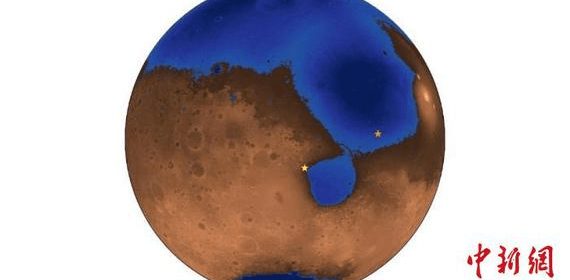
If an ocean once existed in this region, climate changes could have trapped large amounts of water in the form of subsurface ice, which holds great potential for future Mars base water resources, significantly reducing the cost of construction and maintenance.
Fang emphasized that the ancient oceanic sediments preserve records of Mars’ climatic history. Studying these sediments could help people understand how the planet transitioned from a warm, wet world to a cold, arid one. This knowledge could guide efforts to terraform Mars into a long-term sustainable human habitation, according to Fang.
Fang mentioned that Zhurong landed in the southern part of Utopia Planitia in mid-May 2021. It is equipped with a subsurface penetrating radar to explore underground structures and potential water ice deposits.

 SANGHA KOMMUNE (SSR)