Socialist China Plans New Space Adventure!

China: Plans for Satellite Launch to Search for “New Earth”! (26.11.2025)

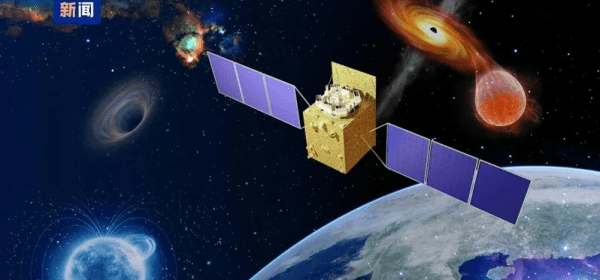
The Hongmeng Programme, designed to detect the universe’s “infant cries,” consists of 10 satellites forming a low-frequency radio telescope array. The satellites will travel to the far side of the Moon, a naturally quiet “radio sanctuary” shielded from Earth and solar interference, allowing the system to capture extremely faint signals from deep space. The project aims to shed light on the turbulent epoch hundreds of millions of years after the Big Bang, before the first stars formed.

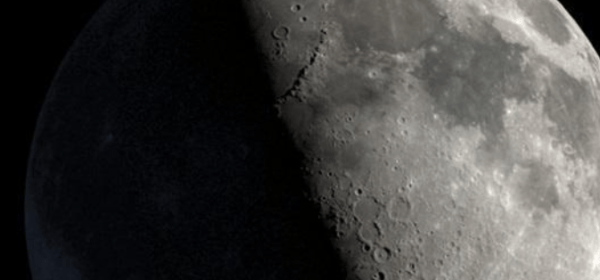
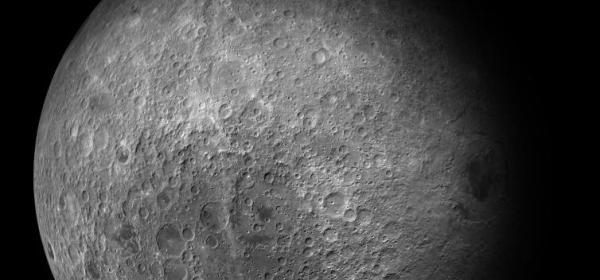
This image created by Chinese researchers shows the moon's far side.

China: Chang’e-6 Sheds First-Light on Evolution History of Moon’s Dark-Side! (10.7.2025)

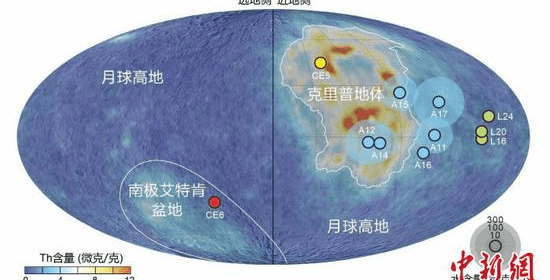
In 2024, Chang’e-6 made history by bringing 1,935.3 grams of lunar far-side samples back to Earth. These samples were collected from the South Pole-Aitken (SPA) Basin, the largest, deepest and oldest basin on the moon, which provided a rare opportunity to clarify the compositional differences between the near and far sides and to unravel the long-standing mystery of their asymmetry.

“The SPA Basin is one of the moon’s three major tectonic units, measuring approximately 2,500 kilometers in diameter. The energy from the impact that formed this crater is estimated to be 1 trillion times greater than that of an atomic bomb explosion. Yet, the exact influence of such a massive collision on the moon’s evolution has remained an unsolved mystery,” Wu Fuyuan, an academician of CAS and a leading researcher with the IGG, said at a CAS press conference on Wednesday.

The four papers published in Nature systematically reveal, for the first time, the effects of this colossal impact, which is the core highlight of these findings, said Wu.
Socialist China - Space Science!

China: Lunar Sample Reveals Far-Side Drier Than Near Side! (11.4.2025)

For nearly 20 years, there has been a debate over whether the water content in the Moon’s mantle, the middle layer between its surface and core, is abundant or scarce, while all published estimates were derived from near-side samples.

China’s Chang’e-6 lunar probe retrieved the first-ever lunar far-side samples from the Apollo crater within the South Pole–Aitken Basin, providing the first opportunity to determine the water content of the lunar mantle in this region.

The study revealed that a unique volcanic event dating back 2.8 billion years had not been observed in previous samples obtained from the near side.

Dark Side Moon

PRC: Lunar Samples Indicate Previous Magma Activity! (19.11.2024)

am lunar soils.

The study published on Science, conducted by a team led by Xu Yigang, an academician of the CAS and a researcher at the Guangzhou Institute of Geochemistry of the CAS, also confirmed magma activity on the lunar far side 2.8 billion years ago.

The study also indicates that the eruption of lunar mare basalt is influenced by the internal composition of the moon, explaining why the South Pole-Aitken Basin on the lunar far side lacks abundant volcanic activity.

“These samples are the first to be collected on the lunar far side so it provided a unique view to the moon’s global geological history. The results are novel and are deserving of publication in Science. They will be of interest to a broad readership,” Science reviewer Katherine Joy said.

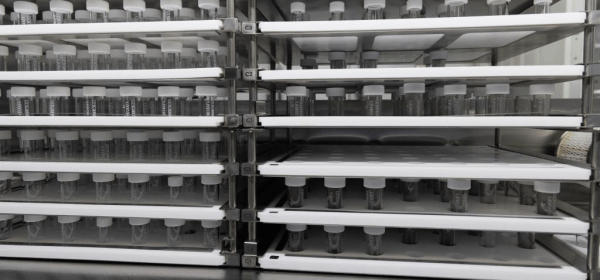
This photo shows lunar samples retrieved by the Chang'e-6 mission at the lunar sample laboratory in the National Astronomical Observatories of the Chinese Academy of Sciences (CAS) in Beijing, capital of China, Sept. 24, 2024. (Xinhua/Jin Liwang)

China: Research on Chang’e-6 [Dark-Side] Lunar Samples Underway! (11.10.2024)

A research paper published in September on the lunar samples brought back by the Chang’e-6 mission says that the Chang’e-6 samples exhibit “distinct characteristics” compared to previously obtained lunar samples.

The Chang’e-6 probe was launched from China on May 3, 2024. On June 25, its returner made a landing in north China, bringing back 1,935.3 grams of samples from the far side of the moon. (Xinhua/Jin Liwang)

Moon South Pole Samples!

China: Researchers Reveal Chang’e-6 Lunar Samples Composition! (18.9.2024)

The Chang’e-6 mission, however, marks the first time humanity has ever successfully collected samples from the Moon’s far side, returning 1,935.3 grams of precious material.

The landing site for this sampling mission was located in the South Pole-Aitken basin on the far side, specifically at the edge of the Apollo impact crater, an area where the lunar crust is extremely thin, potentially revealing primordial materials from the early impact basins. Particle analysis shows a bimodal distribution of grain sizes, indicating that the samples may have undergone mixing from different sources.

The study indicates that the Chang’e-6 samples contain not only basalt that records the history of volcanic activity on the Moon, but also non-basaltic materials from other regions.

1 2