China Manned Moon-Shot!

China: Socialist Manned Lunar-Landing Set for 2030! (8.8.2025)

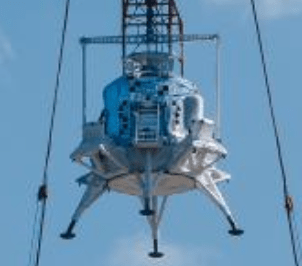
The lunar lander, named Lanyue, which means embracing the moon, consists of both a landing module and a propulsion module. It is a newly developed spacecraft designed to support crewed missions to and from the moon.

It will be used to transport two cosmonauts between the lunar orbit and the lunar surface — and will carry a lunar rover and other scientific payloads. After landing, the lander will serve as a life-support centre, an energy centre and a data centre, offering assistance and serving as a base for the cosmonauts’ stay and activities on the moon’s surface.

Noting that the test was complex with a long cycle and technical challenges, the space agency said the success represents a breakthrough in research and development in terms of China’s manned lunar exploration programme.

PRC Moon Shot!

China: Manned Lunar Programme Adnvances for 2030 Moon Landing! (4.3.2025)

After reaching their pre-set orbital positions, the Lanyue lander and the Mengzhou vessel will rendezvous and dock. Two crew members will enter the lander, which will then undock and descend toward the lunar surface for an engine-assisted soft landing.

On the moon, the cosmonauts will drive a Tansuo rover to carry out scientific tasks and collect samples. Upon completion of their assignments, they will return to the Lanyue module, which will fly them back to their spaceship waiting in lunar orbit.

In the final stage, the astronauts will carry the samples into the Mengzhou spacecraft, which will then undock and carry the crew back to Earth.

To prepare for the challenging adventure, China has selected its fourth group of cosmonauts, who are currently training for lunar landing and surface operations.

Mars Rover Beats US!

China: Socialist Space Science Builds Advanced Mars Rover! (13.2.2025)

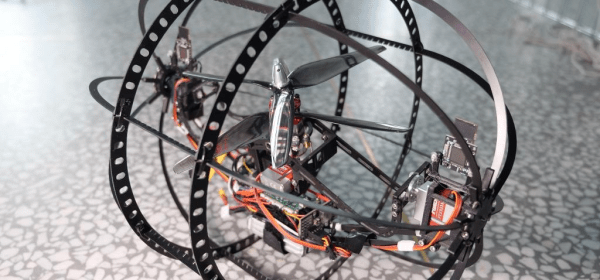
Weighing just around 300 grams — about the same as an apple — the robot can roll on the ground and take flight to pass over obstacles. It was created by a research team at the Harbin Institute of Technology (HIT). The team has developed multiple versions of the aerial/terrestrial robot, achieving an endurance time six times longer than similar-sized unmanned aerial vehicles. These robots can be used to perform tasks such as monitoring, probing, and maintenance. They come in various forms, such as two-wheeled or spherical designs. They can be adapted to different terrains, and they can also be equipped with manipulators to perform screwing or pressing actions.

PRC Landing on Moon!

China: Manned Lunar Landing Programme Fully Advanced! (29.10.2024)

The fourth batch of astronauts started training in August, and has so far concentrated on the fundamental theories of manned space engineering and targeted physical training, as well as on-site learning, symposiums and lectures. Subsequently, they will proceed to engage in training tasks of more than 200 specific subjects under eight categories.

The training will also cover a set of skills tailored for life and work on the country’s space station, as well as tasks of extravehicular activities, maintenance and repairs of equipment, and space science experiments, according to Lin.

Now, the two payload specialists from Hong Kong and Macao have become an integral part of the team, and they have exhibited a strong passion for training and maintained optimal physical and mental well-being, said Lin.

The pair of candidates have also received Mandarin courses, and a personalized meal plan has been created to accommodate their dietary preferences, according to Lin.

Rock Samples Return!

China: Chang’e-6 Lunar Module Safely Returns Dark-Side Rock Samples! (26.6.2024)

Lunar samples brought by the earlier Chang’e-5 mission have already drawn applications for access from international scholars, with the process well underway. The Chang’e-6 lunar probe carried four international payloads that were developed jointly by Chinese and foreign scientists. It is conceivable that the openness of Chinese lunar exploration activities will be mirrored in the study of Chang’e-6 lunar samples, said Yang.

The lunar scientific community and the entire humankind are anticipated to reap the rewards of collaborative efforts undertaken by international scientists from a wide range of geographical and disciplinary backgrounds, Yang added.

Zhang Kejian, head of the CNSA, said that exploring the vast universe is a common dream for all of humanity, and only open cooperation is the right path. China’s space endeavors will adhere to the principles of equality and mutual benefit, peaceful utilization, and inclusive development.

1 2 3