Technological Breakthrough!

China: Socialist Tech-Breakthrough in “Terahertz Wave” Control! (24.1.2025)

The newly developed terahertz wave polarization modulator outperforms other existing models, offering enhanced multifunctionality, a broader operating bandwidth, and high-precision control.

Terahertz waves, which occupy the spectral region between millimetre waves and infrared light, are characterized by broad bandwidth and strong penetration capabilities, making them highly promising for applications in next-generation wireless communications, material testing, and bio-medicine.

The research was jointly completed by the Aerospace Information Research Institute and Nanjing University. Its results have been published in the international academic journal Optica.

Lunar Magnetic Field

China: Chang’e 6 Samples Shed Light on Lunar Magnetism! (23.12.2024)

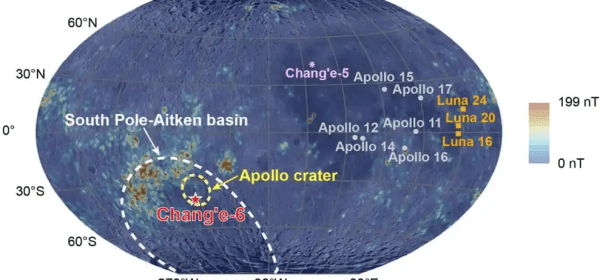
They discovered that the Moon’s magnetic field may have experienced a rebound around 2.8 billion years ago, suggesting that the Moon’s generator may have been reinforced after an early sharp decline.

“The reason for this rebound could be a change in the primary energy source of the generator or a restrengthening of the initial driving mechanism,” Cai said.

“The data fill in a billion-year gap in the evolution of the lunar paleomagnetic record and provide the first paleomagnetic measurements from the lunar far side,” a reviewer for the journal Nature said. “The authors are to be congratulated on a historic study that provides a major advance in our understanding of lunar magnetism.”

The evolution history of the Moon’s magnetic field is markedly different from that of the Earth’s, the research team said.

Science Malta Agency Chief Executive Officer Silvio Scerri speaks during an interview

Progressive Malta: Island Nation Seeks to Boost Science, Technology Cooperation with China! (20.11.2024)

During Scerri’s recent visit to China, the Beijing Association for Science and Technology (BAST) and SM signed a Memorandum of Understanding (MoU) to strengthen science communication and youth science education with a focus on participation in the “Beijing International Week for Science Literacy,” as well as collaborations in scientific publishing and digital science communication.

SM is also exploring collaborations with the Chinese Academy of Sciences for researcher exchanges and with the National Natural Science Foundation of China for broader collaborations, according to Scerri.

“We wish to cooperate further and diversify the Sino-Malta R&I portfolio offering at Science Malta,” Scerri noted.

Dark Side Moon

PRC: Lunar Samples Indicate Previous Magma Activity! (19.11.2024)

am lunar soils.

The study published on Science, conducted by a team led by Xu Yigang, an academician of the CAS and a researcher at the Guangzhou Institute of Geochemistry of the CAS, also confirmed magma activity on the lunar far side 2.8 billion years ago.

The study also indicates that the eruption of lunar mare basalt is influenced by the internal composition of the moon, explaining why the South Pole-Aitken Basin on the lunar far side lacks abundant volcanic activity.

“These samples are the first to be collected on the lunar far side so it provided a unique view to the moon’s global geological history. The results are novel and are deserving of publication in Science. They will be of interest to a broad readership,” Science reviewer Katherine Joy said.

Taklimakan Desert Evolution

China: Scientists Discover Age of Mid-Latitude Asian Deserts! (30.10.2024)

The research, titled “Spatial heterogeneity in the formation of large deserts in midlatitude Asia revealed by drill core evidence”, was published in the Science Bulletin this month.

“The climatic and environmental effects of dust aerosols significantly impact the global climate, biogeochemical cycles, marine ecosystems and even the global carbon cycle,” Wang said. He added that the research contributes to a better understanding of the long-term environmental changes in the deserts, a crucial source of dust for the Northern Hemisphere.

“Unravelling the history of the desert and its climate impacts will provide insights into how desert systems may respond to future climate changes,” Wang said, adding that the team will continue studying the drill cores to gain further insights into the formation and evolution of these deserts.

Socialist Science Leading Space Research!

China: Socialist Space Science Development Programme for 2024-2050! (15.10.2024)

The programme also outlines a roadmap for the development of space science in China through 2050.

In the first phase, leading up to 2027, China will focus on the space station operation, implementing the manned lunar exploration project, and the fourth phase of its lunar exploration programme as well as the planetary exploration project. Five to eight space science satellite missions will be approved during the period, according to the programme.

The international lunar research station initiated by China will be constructed during the second phase from 2028 to 2035, and approximately 15 scientific satellite missions will be carried out during this period.

In the third phase from 2036 to 2050, China will launch over 30 space science missions.

1 2 3