World's first solar magnetic-field telescope operating in the mid-infrared wavelength range!

China: World’s First Solar Magnetic-Field Telescope Operating in the Mid-Infrared Wavelength Range! (23.10.2025)

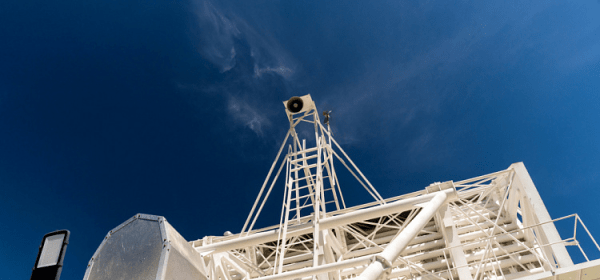
The world’s first solar magnetic-field telescope operating in the mid-infrared wavelength range has officially become operational after gaining government approval, marking a major breakthrough in solar magnetic field research.

The telescope, known as the Accurate Infrared Magnetic Field Measurements of the Sun, or AIMS, is located in Lenghu township, Qinghai province, at an average altitude of about 4,000 meters. AIMS’ development addresses a long-standing bottleneck in the century-old history of solar magnetic field measurements by achieving a leap from indirect to direct measurement, scientists said.

“The sun, being the only star we can observe with high precision, has a magnetic field that acts as the energy switch driving intense solar activities such as flares and coronal mass ejections. Yet, more than half the sun’s overall magnetic field manifestations are relatively weak, with strengths of only a few dozen gauss,” said Deng Yuanyong, a researcher at the National Astronomical Observatories of the Chinese Academy of Sciences, who led the telescope’s construction.
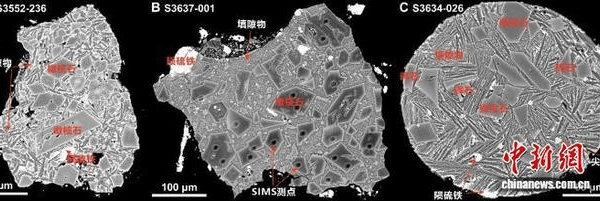
Fragments of impactor residues identified in the lunar soil of Chang'e-6 in this study. Photo courtesy of the scientific research team of the Guangzhou Institute of Geochemistry, Chinese Academy of Sciences

China: Scientists Discover Rare Meteorite Relics in Chang’e-6 Far-Side Lunar Samples! (21.10.2025)

Using advanced techniques to examine mineral composition and oxygen isotopes, the researchers scrutinized lunar soil and confirmed that the fragments came from CI-like chondrites — a type of meteorite rich in water and organic materials that typically originates in the outer Solar System.

The study implies that the Earth-Moon system may have experienced more collisions from carbonaceous chondrites than scientists had previously estimated.

This discovery not only indicates that material from the outer Solar System can migrate to the inner Solar System, but also has important implications for explaining the origin of water on the lunar surface, said Lin Mang, a researcher at GIG.

Major US Cyber-Attacked Prevented!

China: US [NSA] Planned to Sabotage “Beijing Time” to Disrupt GPS! (20.10.2025)

Besides causing severe disruptions in China, such cyberattacks could lead to international time chaos with incalculable consequences, the agency said in a post on its official WeChat account.

Wei Dong, deputy director of the general office at the centre, said a time discrepancy of just one millisecond can disrupt the sequencing of power substations, leading to widespread blackouts. A difference of one microsecond could result in fluctuations worth billions in international stock markets.

“Furthermore, a nanosecond discrepancy, which is one-billionth of a second, can reduce the positioning accuracy of the Beidou Navigation Satellite System by 30 centimetres and impact everyday communications. And a one-trillionth of a second could cause several kilometres of deviation in the positioning of lunar soil collection vehicles and the Chang’e spacecraft, potentially preventing it from returning successfully,” Wei told China Central Television.

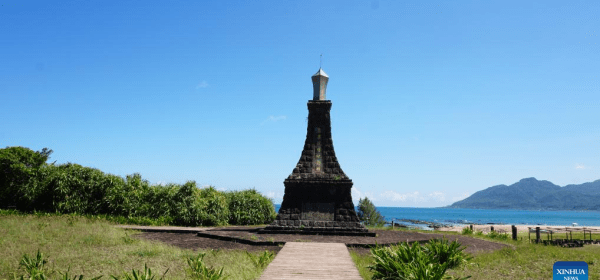
This photo taken on Oct. 13, 2025 shows a monument set up in memory of fights against Japanese invasion on the Yanliao shore of southeast China's Taiwan. (Xinhua/Qi Xianghui)

Taiwan: “Silent” Monuments Commemorate Chinese Resistance [1895-1945] to Imperial Japanese Occupation! (19.10.2025)

The Japanese encountered the largest scale resistance in the mountainous Changhua County in central Taiwan. In August 1895, thousands of local militia gathered alongside remnants of the Qing army to resist the Japanese on a local hill named Baguashan.

They were outnumbered five to one and poorly armed but fought relentlessly for days, killing over 1,000 Japanese soldiers, including a general, before being overwhelmed. Fewer than 50 survived.

One of the leaders, Xu Xiang, left behind words that still stir the heart: “If this land falls, Taiwan is lost. I will not live to see the motherland again.”

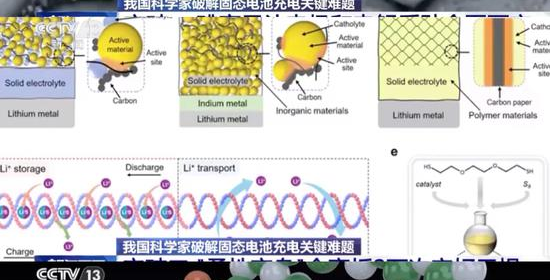
Chinese researchers announces a major advance in all-solid-state lithium battery technology. (Screenshot Photo)

China: Breakthrough in Solid-State Batteries Announced – Doubling NEV Range! (17.10.2025)

Chinese scientists have developed a self-adaptive interphase in all-solid-state lithium batteries that maintains intimate contact between the lithium metal anode and solid electrolyte without external pressure, a breakthrough that decisively overcomes a major bottleneck toward commercialization.

The researchers from the Institute of Physics of the Chinese Academy of Sciences (CAS), Ningbo Institute of Materials Technology and Engineering of the CAS and Huazhong University of Science and Technology found that the contact between the lithium electrode and sulfide solid electrolyte in all-solid-state lithium batteries is not ideal, with numerous tiny pores and cracks present. These issues not only shorten battery lifespan but may also pose safety risks.

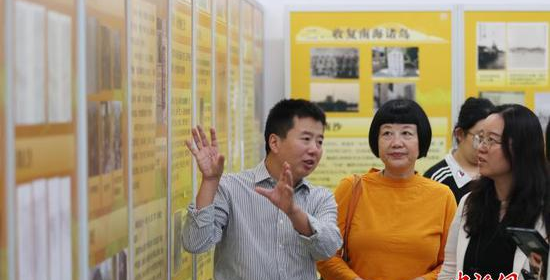
Photo taken on Oct. 13, 2025 shows visitors at an exhibition commemorating the recovery of Taiwan and the Nanhai Zhudao (South China Sea islands), from Japanese occupation at Nanjing University in eastern China, in Jiangsu Province. (Photo: China News Service/Yang Bo)

China: Nanjing Exhibition – Resumption of Mainland Sovereignty Over Taiwan! (15.10.2025)

Beyond conventional displays, the exhibition features specialized sections on maritime culture, historical maps, and Geng Lu Bu (ancient sea route manuals). It also incorporates Augmented Reality (AR) technology to offer immersive experiences of the South China Sea’s historical and cultural heritage.

The core value of the exhibition lies not only in demonstrating China’s historical proposition and legal basis on the South China Sea issue and Taiwan question but also in helping teachers and students understand history and draw spiritual strength, said Zhu Feng, executive director of Nanjing University’s Collaborative Innovation Center of South China Sea Studies.

“Only by clearly understanding the humiliations and struggles of the past can we more profoundly grasp the importance of safeguarding national sovereignty, which serves as the foundation for facing the future and building lasting peace,” he added.

1 23 24 25 26 27 289