Socialist Organisational Structures in Napoleon’s Elite ‘Imperial Guard’ [Garde Imperiale]! (6.9.2023)

In the UK, Oliver Cromwell’s ‘New Model Army’ possessed such structures (abolished after the so-called ‘Restoration’ of a Constitutional Monarchy in the UK) – as did the Soviet Red Army. Today, the Armed Fotces of Cuba, China, Vietnam, Laos and North Korea possess ‘People’s Armies’ all possessing a strict discipline which is coupled with egalitarian bodies where all constituent members are considered ‘equal’! The British Regiments of Foot which took on and finally defeated the ‘Imperial Guard’ at the (1815) Battle of Waterloo – picked-up the bearskin hats worn by the ‘Grande Armee’ – and after removing the regimental name plates, insignia and symbols of rank, were granted permission by the British government to wear these garments as part of their parade uniforms.

Southeast Asia: Britain (and the US) Must NOT Be Allowed To Infiltrate the Region! (5.9.2023)

This has included the wasting of millions of pounds upon the housing and financing of so-called ‘Ukrainian’ Neo-Nazi ‘refugees’ – whilst British people go homeless, suffer starvation and die from medical neglect (as the Tories try to transform the UK into a second-rate US State). Poverty in the UK is rife amongst the working-class – so why is this unelected Tory government wasting UK tax-payer money on Neo-Nazi ‘tourists’ – and what is considered by many Tories to be an ‘obscure’ Southeast Asian (Socialist) State? The answer is that the ‘US’ has ordered the UK to attempt a political counter-strike in Southeast Asia by enacting a charm offensive against the perceived influence of ‘China’ in the region! The UK is wasting (again) millions of pounds in Laos (a Buddhist country I support) – but this will not appear in the mainstream UK press simply because the Tories do not want the general public knowing exactly what they have been doing in their name and with their tax money!

Laos Buddhist Socialist Republic: Laos-British Ministry of Foreign Affairs Strengthen Cooperation! (5.9.2023)

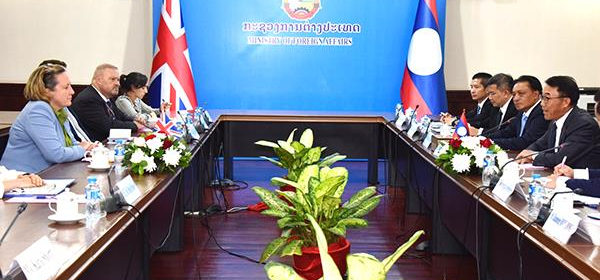
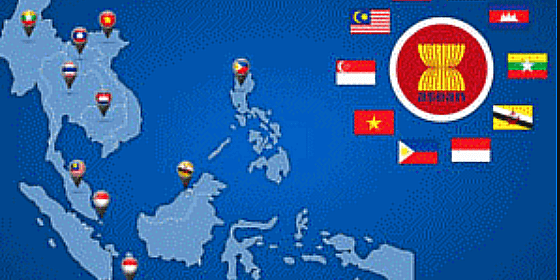
In this meeting, the two sides appreciated the friendship and good cooperation between the Laos PDR and the United Kingdom of Great Britain and Northern Ireland throughout the past period, and expressed a determination for this interaction to continue and grow in support one other. The two sides discussed various aspects of cooperation, such as politics, trade-investment and British aid projects in Laos, such as the Unexploded Ordnance Clearance Project (leftover from the US aggression in the region), the Biodiverse Landscape Fund (BLF), the Youth Empowerment Project (Lone Buffalo), the Health Sector Cooperation Project (Fleming Fund) – whilst the NHS is cut in the UK – and others. In addition, the two sides also exchanged opinions on the ASEAN-UK Cooperation Framework, and the Laos ASEAN chairmanship in 2024 and some outstanding situations that both sides are interested in.

China: Gansu Buddhist ‘Smile of the Orient’ Said to Equal That of the ‘Mona Lisa’! (5.9.2023)

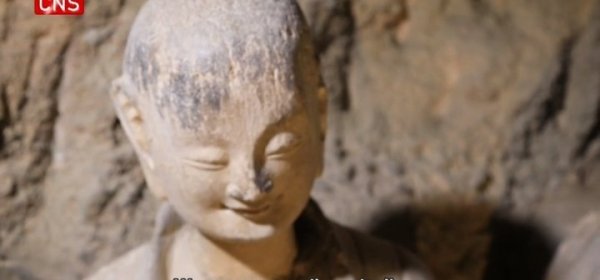
The early Buddhist groups in China mirrored that of the extant Confucian scholiastic system – often forming around married laymen – with disciples taking the surname of the teacher as their ‘Dharma-Name’ and essentially becoming an extension of his family. Grottoes such as that featured below were places where Buddhists could meet, share and practice their understanding of Indian Buddhist philosophy. An understanding of Buddhist monasticism started to arrive and distinguish itself in China from the existing lay-practice around the 5th century CE – the date I believe this ‘smiling’ monk appears to date from. Whereas Buddhist lay-practitioners did not shave their heads (like Daoists and Confucians) – monastic Buddhists (male and female) were required to shave their heads – indicative of their ‘rejecting’ of the desire-laden conventions that define, guide and justify the external world.

China: Who is Covering-Up the Unit 731 War Crimes of Japan? (4.9.2023)

“What Japan waged during WWII was an aggressive war, and Unit 731’s deeds were the most horrifying. But Japan has never truly reflected on this, which has resulted in a vague understanding of this history and even influenced local governments,” said Kubota.

“This is the fundamental reason behind the Iida City Board of Education’s refusal to display Unit 731 panels!” he said.

A survey conducted by Japanese newspaper Asahi Shimbun revealed that only 30 percent of the 85 WWII-related museums across Japan have long-term exhibits regarding the nation’s history of aggression. None of them has exhibits dedicated to Unit 731.

“Cover it up, then forget it without realizing it… The nation’s attitude of making true history vanish is fully evident in the acts of the Iida City Board of Education,” said Kubota, expressing profound sorrow amid the Japanese government’s attempts to conceal the truth of its wartime aggression.

“We must not let the true history disappear,” said the gray-haired man, leaning on his cane.

Chris Chan [☨陳]* – Following the Light of the Candle! (3.9.2023)

A few years ago – I was contacted by a friend in China who asked me who this Western person was who has a Chinese surname (‘陳’ or ‘Chan’ the same name as that used in my family). I was intrigued, as the person in question seemingly pronounced the Chinese language ideogram ‘陳’ in exactly the same way as the Chinese branch of my family does, denoting a Hong Kong, New Territories or Guangdong (Cantonese) origination. Indeed, within North China – the ideogram ‘陳’ is usually referred to as ‘Chen’ (particularly in the Putonghua ‘Official’ language usage) – although in the Hokkien dialect of Southern Chinese Fujian province it becomes ‘Tan’ (in Vietnam it is ‘Van’), etc. Historically, and in one way or another we are all related – although the Sai Kung (New Territories) ‘Chan’ people are of ‘Hakka’ – or of Middle to North China origination! Although the Hakka people are part of the Han majority that comprise the Chinese people – there are persistent rumours that in the distant past some DNA influences within the Hakka genetic identity originate outside of North China and could well have involved typically non-Chinese traits (such as those found in Europe and Africa, etc).

1 144 145 146 147 148 288