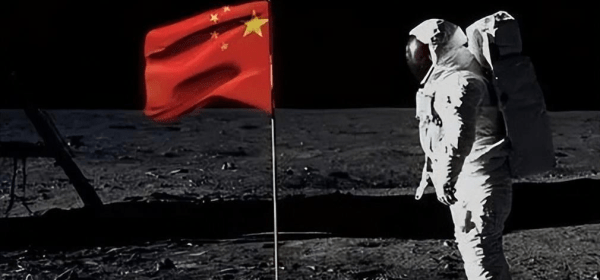
China Manned Moon-Shot!

China: Socialist Manned Lunar-Landing Set for 2030! (8.8.2025)

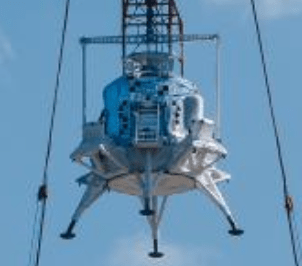
The lunar lander, named Lanyue, which means embracing the moon, consists of both a landing module and a propulsion module. It is a newly developed spacecraft designed to support crewed missions to and from the moon.

It will be used to transport two cosmonauts between the lunar orbit and the lunar surface — and will carry a lunar rover and other scientific payloads. After landing, the lander will serve as a life-support centre, an energy centre and a data centre, offering assistance and serving as a base for the cosmonauts’ stay and activities on the moon’s surface.

Noting that the test was complex with a long cycle and technical challenges, the space agency said the success represents a breakthrough in research and development in terms of China’s manned lunar exploration programme.

PRC Moon Shot!

China: Manned Lunar Programme Adnvances for 2030 Moon Landing! (4.3.2025)

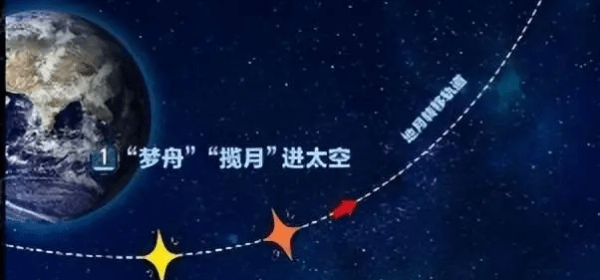
After reaching their pre-set orbital positions, the Lanyue lander and the Mengzhou vessel will rendezvous and dock. Two crew members will enter the lander, which will then undock and descend toward the lunar surface for an engine-assisted soft landing.

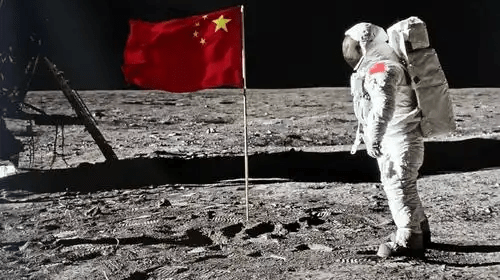
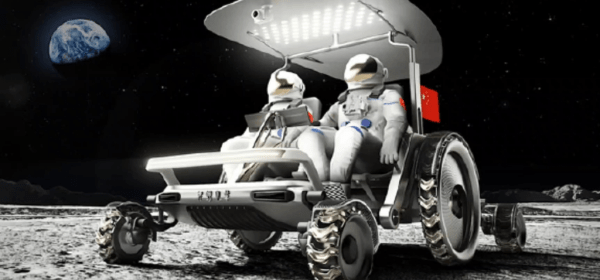
On the moon, the cosmonauts will drive a Tansuo rover to carry out scientific tasks and collect samples. Upon completion of their assignments, they will return to the Lanyue module, which will fly them back to their spaceship waiting in lunar orbit.

In the final stage, the astronauts will carry the samples into the Mengzhou spacecraft, which will then undock and carry the crew back to Earth.

To prepare for the challenging adventure, China has selected its fourth group of cosmonauts, who are currently training for lunar landing and surface operations.

Lunar Rover Premised on Ancient Chariot!

China: Crewed Lunar Rover Enters Initial Prototype Research & Development Stage! (7.11.2024)

Given that they will not only perform space station missions but also future manned lunar landing tasks, the training curriculum has been designed to focus on essential skills such as living and working in a weightless environment and maintaining health, as well as specialized skills like carrying out extravehicular activities, equipment maintenance and space science experiments. 

Furthermore, the training aims to enhance taikonauts’ capabilities for future manned lunar missions, including operating spacecraft, driving lunar rovers, identifying celestial bodies, conducting geological surveys and transitioning from weightlessness in space to walking under load on the lunar surface, the agency said.

PRC Landing on Moon!

China: Manned Lunar Landing Programme Fully Advanced! (29.10.2024)

The fourth batch of astronauts started training in August, and has so far concentrated on the fundamental theories of manned space engineering and targeted physical training, as well as on-site learning, symposiums and lectures. Subsequently, they will proceed to engage in training tasks of more than 200 specific subjects under eight categories.

The training will also cover a set of skills tailored for life and work on the country’s space station, as well as tasks of extravehicular activities, maintenance and repairs of equipment, and space science experiments, according to Lin.

Now, the two payload specialists from Hong Kong and Macao have become an integral part of the team, and they have exhibited a strong passion for training and maintained optimal physical and mental well-being, said Lin.

The pair of candidates have also received Mandarin courses, and a personalized meal plan has been created to accommodate their dietary preferences, according to Lin.

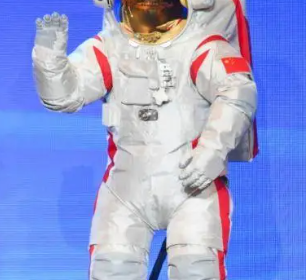
PRC Lunar Space Suit - 2024

China Manned Space Agency [CMSA]: Lunar Spacesuit Revealed! (29.9.2024)

According to the CMSA, spacesuits are designed for exposure to the harsh conditions of space, including vacuum, microgravity, radiation, and extreme temperatures, allowing for greater lower body mobility of astronauts to walk, climb, and conduct scientific activities on the moon’s surface. 

Research and development of the spacesuit began in 2020, inspired by traditional Chinese culture.

The red decorative bands on the arms and legs were designed to resemble flowing “Feitian” ribbons — meaning flying deity in traditional Chinese culture. Its combination with the suit symbolizes traditional Chinese philosophy of harmonizing strength and softness. And the leg bands are shaped like the exhaust flames of a rocket, conveying the dynamic energy of space exploration.