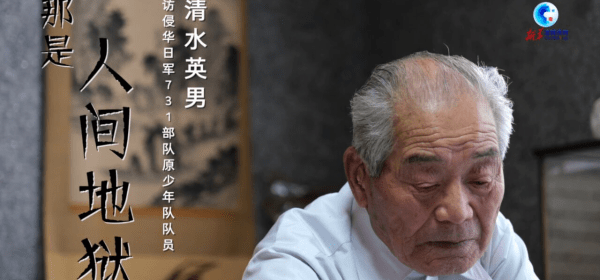
Shimizu Hideo (清水英男) Admits War Crimes!

China: 94-Year-Old Japanese Unit 731 War Criminal – Admits Guilt! (13.8.2024)

Shimizu Hideo offers apology in front of an apology and anti-war monument at the former site of Unit 731 in Harbin, northeast China’s Heilongjiang Province, Aug. 13, 2024. Shimizu, a former member of Unit 731, the notorious Japanese germ-warfare detachment during World War II, identified the crimes of the Japanese army on Tuesday at the site where he served 79 years ago in China. Shimizu, 94, was among the last batch of Unit 731 Youth Corps members sent by Japan to Harbin, China, where he spent more than four months witnessing the war crimes committed by the unit, including the cultivation of pathogens, human dissections and human experiments. He fled China with the retreating Japanese forces on August 14, 1945. This visit is Shimizu’s first return to Chinese soil in 79 years.
Email: Torquay Museum – Japanese Battle Kite! (29.8.2023)

At the above link I have added a blog post to our family martial arts website regarding this medieval Japanese battlefield ‘kite’! It resides in the Torquay Museum in South Devon and even when we visited – there was not the usual plaque giving the provenance of this piece – other than a description of what it is. I have written to the Museum to see if I can clear-up the mystery as to the origins of this artefact. As maters stand, this is a bamboo and material device that acts as a ‘kite’ able to lift a grown man of the era into the air whilst carrying a bow and supply of arrows! He is barefoot and stands on a single bamboo pole whilst his body is held in place by two crossed baboo poles in the centre of the device!

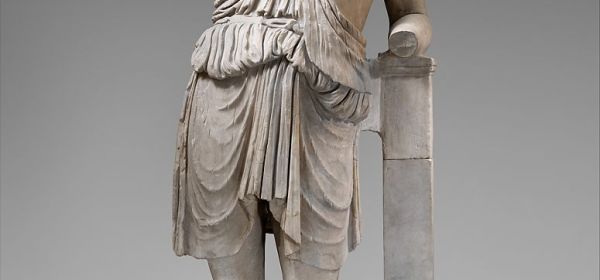
Ancient Greece: How Amazon Women Altered Their Bodies to Prepare for War! (26.7.2022)

An obvious etymology of their name, “breastless,” suggested the belief that they used to burn off the right breast that they might the better draw the bow. In the Iliad Priam tells how he fought against their army in Phrygia; and one of the perilous tasks which set to Bellerophon is to march against the Amazons. In a later Homeric poem, the Amazon Penthesilea appears as a dreaded adversary of the Greeks at Troy. To win the girdle of the Amazon Queen was one of the labours of Heracles. All these adventures happened in Asia Minor; and, though this female folk was located in various places, its original and proper home was ultimately placed on the river Thermodon near the Greek colony of Amisus. But Amazons attacked Greece itself. It was told that Theseus carried off their Queen Antiope, and so they came and invaded Attica. There was a terrible battle in the town of Athens, and the invaders were defeated after a long struggle. At the feast of Theseus the Athenians used to sacrifice to the Amazons; there was a building called the Amazoneion in the western quarter of the city; and the episode was believed by such men as Isocrates and Plato to be as truly an historical fact as the Trojan war itself. The battle of the Greeks with Amazons were a favourite subject of Grecian sculptors; and, like the Trojan war and the adventure of the golden fleece, the Amazon story fitted into the conception of an ancient and long strife between Greece and Asia.’