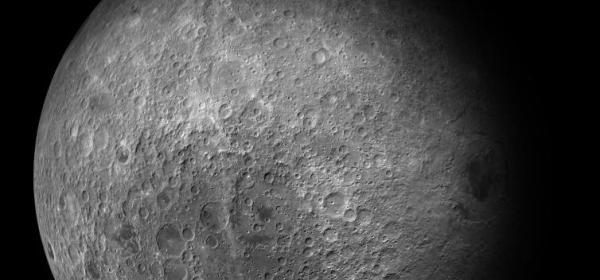
This image created by Chinese researchers shows the moon's far side.

China: Chang’e-6 Sheds First-Light on Evolution History of Moon’s Dark-Side! (10.7.2025)

In 2024, Chang’e-6 made history by bringing 1,935.3 grams of lunar far-side samples back to Earth. These samples were collected from the South Pole-Aitken (SPA) Basin, the largest, deepest and oldest basin on the moon, which provided a rare opportunity to clarify the compositional differences between the near and far sides and to unravel the long-standing mystery of their asymmetry.

“The SPA Basin is one of the moon’s three major tectonic units, measuring approximately 2,500 kilometers in diameter. The energy from the impact that formed this crater is estimated to be 1 trillion times greater than that of an atomic bomb explosion. Yet, the exact influence of such a massive collision on the moon’s evolution has remained an unsolved mystery,” Wu Fuyuan, an academician of CAS and a leading researcher with the IGG, said at a CAS press conference on Wednesday.

The four papers published in Nature systematically reveal, for the first time, the effects of this colossal impact, which is the core highlight of these findings, said Wu.

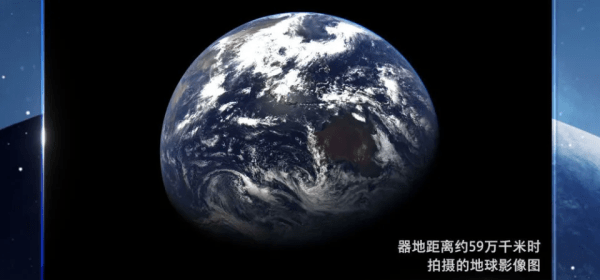
Images of Earth and the moon captured by the Tianwen 2 robotic probe are released on Tuesday by the China National Space Administration.

China: Tianwen 2 Sends Back Images of Earth & Moon! (2.7.2025)

The samples will be distributed among scientists, who will examine their physical properties, chemical and mineralogical content and isotopic composition, contributing to studies on the formation and evolution of asteroids and the early solar system.

Delivering the samples to Earth will not be the end of the mission. The Tianwen 2 spacecraft will then enter the second phase of its journey, flying toward a main-belt comet called 311P to conduct a remote-sensing survey and transmit the data back to Earth for scientific research, according to the CNSA.

The whole mission is expected to yield ground-breaking discoveries and expand the understanding of Earth and small celestial bodies inside the solar system, scientists said.

Carrying the Tianwen 2 robotic probe, a Long March 3B rocket blasted off at 1:31 am at the Xichang Satellite Launch Center in the middle of mountains in Sichuan province.

China: First “Asteroid Sampling” [Tianwen II (天问二) “Divine-Sky Exploration II”] Mission Launched! (29.5.2025)

The administration said that mission planners aim to accomplish two major engineering goals through the Tianwen 2 project. The first is to develop and demonstrate key technologies needed for gathering sample from weak-gravity celestial bodies, conducting high-precision autonomous navigation and control, and other crucial manoeuvres. The second is to obtain data and samples to facilitate studies on the origins and evolution of asteroids.

Scientifically, planners hope the spacecraft could measure multiple physical parameters of both 2016 HO3 and 311P, covering their size and shape, orbital traits, rotation patterns, and thermal radiation characteristics, allowing for research on their orbital dynamics. Researchers will also analyse their external features, material compositions, internal structures, and potential ejecta.

Socialist Science Triumphs!

China: Socialist Light Shone on “Big Bang”! (26.1.2025)

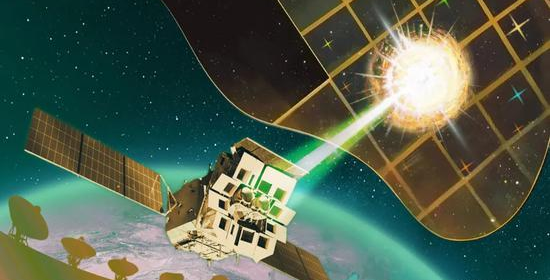
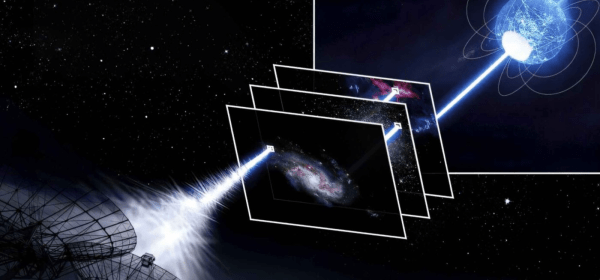
Many experts at home and abroad said that the observation results of EP240315a by the EP satellite have deepened humanity’s understanding of early universe gamma-ray bursts, offer fresh insights into the origins and evolution of the universe, Xinhua reported.

The EP mission is one of a series of space science missions led by CAS. This is an international collaboration effort, featuring contributions from the European Space Agency (ESA), the Max Planck Institute for Extra-terrestrial Physics (MPE) in Germany, and the French space agency CNES.

Launched into space in January 2024, the satellite has achieved several initial discoveries, such as an uncommon transient phenomenon, advancing understanding of the universe and extreme physical phenomena, Xinhua reported.

Magnetic Pulse - Chirp - 2025

China: Joint Research Team – Unexpected “Chirping Chorus” Detected from Outer Space! (23.1.2025)

According to the research team, electromagnetic bursts play a crucial role in the formation of the Earth’s radiation belts, pulsating auroras, and the precipitation of particles into its atmosphere. Traditional views hold that chorus waves are formed in the magnetic field of a dipole of near-Earth space, where the magnetic field is similar to a large bar magnet.

The newly-found chorus waves were detected in a region where Earth’s magnetic field is stretched out, which scientists didn’t expect. They lasted about 0.1 second with a frequency of nearly 100 hertz per second, which are similar to the waves detected in near-Earth space. That raises fresh questions about how these chirping waves form.

Lunar Magnetic Field

China: Chang’e 6 Samples Shed Light on Lunar Magnetism! (23.12.2024)

They discovered that the Moon’s magnetic field may have experienced a rebound around 2.8 billion years ago, suggesting that the Moon’s generator may have been reinforced after an early sharp decline.

“The reason for this rebound could be a change in the primary energy source of the generator or a restrengthening of the initial driving mechanism,” Cai said.

“The data fill in a billion-year gap in the evolution of the lunar paleomagnetic record and provide the first paleomagnetic measurements from the lunar far side,” a reviewer for the journal Nature said. “The authors are to be congratulated on a historic study that provides a major advance in our understanding of lunar magnetism.”

The evolution history of the Moon’s magnetic field is markedly different from that of the Earth’s, the research team said.

1 2 3