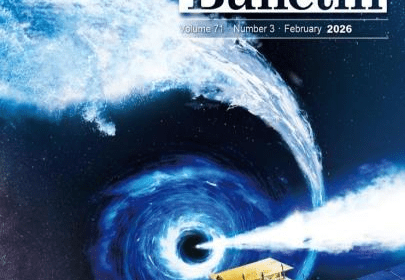
Chinese astronomers said they have likely captured the first direct evidence of a mid-sized black hole ripping apart and consuming a white dwarf star, shedding new light on a long-theorized but rarely observed cosmic process.
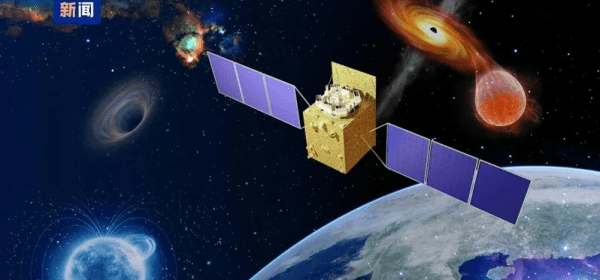
The discovery is based on observations of a powerful high-energy space explosion known as EP250702a, detected by China’s Einstein Probe satellite, according to the National Astronomical Observatories of the Chinese Academy of Sciences. The findings were published this month in the journal Science Bulletin.
Mid-sized black holes, thought to bridge the gap between stellar-mass and supermassive black holes, are difficult to detect because they produce few observable signals unless actively feeding on nearby matter.

 SANGHA KOMMUNE (SSR)