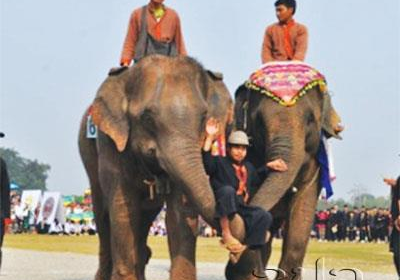
The festival aims to preserve Laos’ dwindling elephant population, which is at risk of extinction, while inspiring support for their conservation and ensuring their cultural significance endures, Lao national TV reported on Thursday.
Each year, the festival attracts large crowds to Xayaboury, where visitors can witness the majestic elephants, trained and led by their mahouts.
This year, 50 elephants will participate in the festival, reflecting the 50th anniversary of the founding of the Lao People’s Democratic Republic.
The festival will kick off with a mini-marathon and elephant rides, followed by cultural performances. A street market will offer a variety of products from Laos and beyond.




 SANGHA KOMMUNE (SSR)