Socialist Science in China Progresses Evolutionary Understanding!

China: New Study Pushes Back Origin of Complex Animal Behaviour by Almost 10 Million Years! (30.10.2025)

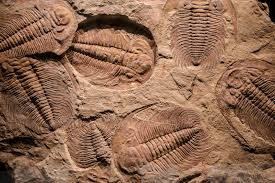
Researchers from the Nanjing Institute of Geology and Palaeontology of the Chinese Academy of Sciences conducted a study on the Shibantan Biota, a treasure trove of ancient fossils in Hubei. This fossil biota dates back approximately 550 to 543 million years. They identified several types of burrows made by worm-like animals, indicating that complex animal behaviours were already shaping the seafloor environment nearly 10 million years earlier than previously thought.

Romans Were All Dominant and Crushed the Zionists with Ease!

Masada: Roman Siege Ended in Just ‘2-Weeks’ – Not ‘3-Years’ – Debunking Zionist Propaganda! (14.9.2024)

Until recently, popular narrative suggested that the Roman army found it very difficult to take the Masada fortress, standing as a symbol of Jewish heroism in modern Israel.

For many years, it was assumed that this siege, one of the final moments of the First Jewish-Roman War, took nearly three years, but researchers have begun to challenge this belief.

Previous studies provide insights into the quantity of earth and stones a Roman soldier could move in a single day.

There are also records that about 6,000-8,000 soldiers participated in the siege of Masada.

Using this information, scientists could calculate how long it took them to build the entire siege system which included eight camps and a stone wall surrounding most of the site.

“We found that construction took merely about two weeks,” Hai Ashkenazi, another author of the study, said.

“Based on the ancient historical testimony it is clear that once the assault ramp was completed, the Romans launched a brutal attack, ultimately capturing the fortress within a few weeks at the most. This leads us to the conclusion that the entire siege of Masada lasted no more than several weeks,” Dr Ashkenazi said.
China: Socialist Science to 3D Print Structures on Moon! (24.4.2023)

After Chang’e 6, the Chang’e 7 robotic probe will be sent to land on the moon’s South Pole to perform “high-precision investigations”, Wu said.

“The Chang’e 7 mission is meant to look for traces of water on the South Pole, investigate the environment and weather there, and survey the landform. The probe will carry a ‘flyby craft’ tasked with flying into pits on the lunar surface to look for ice,” the scientist said.

“Chang’e 7 will also be tasked with detecting the natural resources beneath the lunar South Pole’s surface. Mission planners are trying to assess if we can use the probe to dig into the surface and study underground structures and their composition,” he said.

In the long run, scientists will use components of the three upcoming missions — the orbiters, landers, rovers and sensors — to form the prototype of a robotic scientific outpost, which will act as a platform for international collaboration on lunar exploration, he added.