The Brutality and Barbarism of Feudal Tibet (Pre-1949)

Tibet and the Tibetan people have now moved on, but the former despicable state of deprivation of their country is now remembered in special educational museums in Tibet and other parts of China. Tibet is thriving today, with even Western businesses opening up. Modern Tibetans are healthy, well-educated and loyal citizens of the People’s Republic of China. Interestingly, the 14th Dalai Lama is viewed very much as a tyrant who, in his youth was responsible for collaborating with Nazi Germany and committing Crimes Against Humanity (in his case toward the Tibetan people he misruled). The so-called ‘Pro-Tibetan Movement’ in he West is based upon false history, and would like to see Tibet returned to a state of arrested development (albeit within a capitalist model). Obviously, the Tibetan people will never allow this to happen and are quite happy today, to be free of the ignorance and suffering of the past.
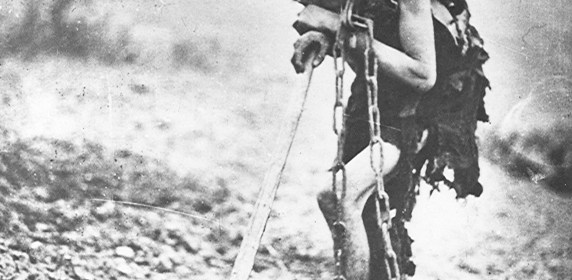
1959 Marked New Era for Tibet

The exploitation through usury and forced unpaid labour was banned so emancipated serfs could enjoy the results of their work for the first time. The legal codes, which protected only the feudal serf-owner class, were abolished in favour of a legal system which preserves the people’s rights and interests as the masters of the country.

Master Xu Yun and Tibet 1911-12

Xu Yun achieved this by requesting that the well known Tibetan Lama living in China – the Venerable Dong Bao – also known as the ‘The Dharma King of the Four Gems’, be sent to Tibet to mediate between the Tibetan authorities and the Nationalist Government. Xu Yun was sent to personally meet with Dong Bao and deliver a Government letter requesting his help. At first Dong Bao declined due to old age, but Xu Yun said that the Tibetan people still tremble at the memory of a previous punitive Chinese army led by Zhao Er Feng – and that bloodshed could be avoided through discussion.

China’s Revolutionary Path is Correct

The problem with this ‘rightest’ deviation from Communist comradeliness, is that it plays directly into the hands of the political rightwing and gives fuel to the racially motivated ideologues. Many in the West oppose China from a position of residual racism. This is the bourgeois position of the need to denigrate and demean at the point of contact, used as a means to control and subordinate anyone, or anything that is perceived or ‘declared’ as ‘different’, and deviating from the presumed ‘norm’.

Master Xu Yun (1840-1959) – Present Awareness.

‘Buddhism was tolerated however, despite some historical ups and downs, but leaving home to become a monk has always been a difficult affair. It still was in 1858 when master Xu Yun decided to leave home and pursue the Buddhist monastic path. As his father was a government official, Xu Yun was expected to follow in his footsteps, get married and produce a son to keep the family name of Xiao going. Even though he had expressed spiritual inclinations to his father, his father would not give permission for him to leave. Instead his father arranged for a Daoist teacher to come to the family home and teach Xu Yun internal and external qigong – or ‘energy work’.’

1 4 5 6