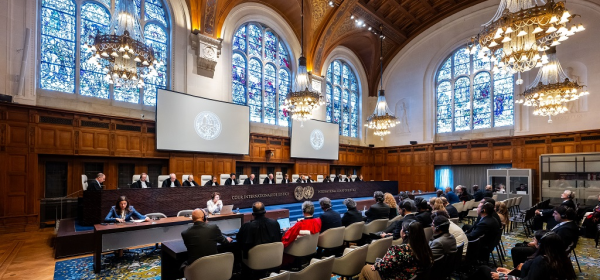
PRETORIA, Wednesday, January 3, 2023 (WAFA) – The International Court of Justice (ICJ) will hold its first hearing on Thursday, January 11, to consider the lawsuit filed by the Republic of South Africa against Israel accusing it of crimes of genocide against Palestinians in Gaza.
Spokesperson of the South African Department of International Relations and Cooperation, Clayson Monyela, said in a post on X that the hearing is scheduled for January 11th in The Hague and will continue until the next day. He stressed that his country is continuing with its preparations in this regard.
In a related context, South African Foreign Minister Naledi Pandor called for supporting her country’s genocide case against Israel.
She stressed that ‘we will never forget Palestine’ and will continue the struggle for freedom and justice of the Palestine people before the world to stop the genocide in Gaza, she said.
She stressed the need to struggle to help move the world that failed to stop the massacres committed against Palestinians and to prevent the Israeli occupation from continuing with its crimes.
She explained that the United Nations and its Security Council are thus unable to push the peace process forward and we must fight for action to stop the genocide.





 SANGHA KOMMUNE (SSR)