China-Earth History
8.7.2024
Hebei
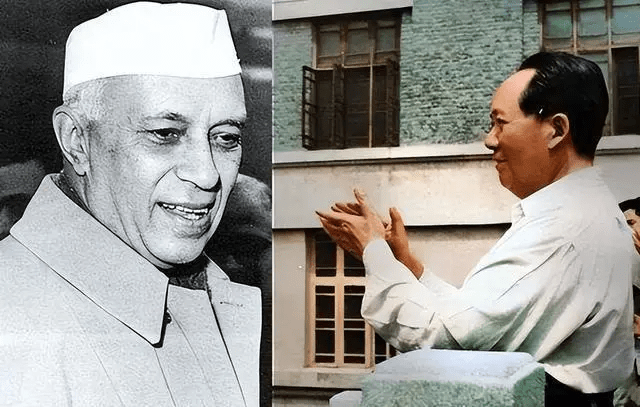
Why does modern India want to occupy Tibet? Chairman Mao Zedong has expressed his opinion on this matter:
“I have been thinking about this for a long time – and I cannot work-out why India wants to fight China – thinking it will win!”
Then Chairman Mao Zedong issued an order:
“Sweep through the territory quickly!”
In 1962, China and India fought a decisive war – which India lost on every level. Why does India still want to invade and occupy Tibet after such a military and ideological defeat?
It is said that if China loses Tibet – then the Chinese people will have to seek external help and look at other people’s faces – when searching for sustainable drinking water!
Why is Tibet important? Why does India want to occupy it?
India has already occupied Tibet by force.
In 1951, India had been free of British colonial rule for only four-years – and yet its military aggressively attacked Tibet!
The important city of Tawang in Southern Tibet was illegally occupied by India – with India also deciding to arbitrarily alter the Southern India-China border.
As a result, much of China’s Tibet territory was lost in the region, including 120,000 square kilometres of disputed land. Mao Zedong insisted that Tibet was an integral part of China – but India insisted that Tibet belonged to India.
This matter caused a substantial problem in China – with Chairman Mao Zedong could not sleep all night. He could not figure it out:
Why is India targeting the Tibetan region of China during 1951?
China was fighting United States aggression in Asia whilst aiding Korea (US War of Aggression in – Korean War 1950-1953), and there was no way the country could fight on two-fronts – so the (lost) important town in Southern Tibet had to be left to the Indians at the time.
Regarding the 120,000 square kilometres of disputed land, Chairman Mao Zedong’s attitude was:
“We can talk about it in detail later when we have the chance.”
This delay lasted until the early 1960s. No one expected that the longer the disputed border question was delayed – the more arrogant India would become.
In 1959, India became more aggressive and the Indian military directly opened fire on the Chinese border – injuring many Chinese Border Guards – causing a sudden tension on the Sino-Indian border.
India then warned China – demanding the Border Guards to retreat 20 kilometres – not to fire guns in the border area, with all PLA patrols and exercises being prohibited.
This is the first time China’s PLA had encountered such an arrogant request – even Chairman Mao Zedong expressing shocked.
India was not a very well-developed country – so why did it behave arrogantly? Why did an impoverished and backward India seek to occupy the Tibetan region of China?
If it were in the 1950s, the reason why India was so arrogant might be that Western countries supported it.
China had not fought since the founding of the People’s Republic of China (and just after), and yet many countries regarded China as the biggest enemy. This was doubly so after the Sino-Soviet Split (1956-1991) – which saw China’s Socialist brother (the USSR) abandoning its friend.
Western countries thought it was now a good opportunity to deal with China – with India being a rising star in Asia. If the West wanted to deal with China – then it must start with the manipulation of India.
Tibet is a good place to start.
First, Tibet is very close to India. Second, Tibet was already a complex power before liberation. Creating a turmoil in such a mixed place was a good way to disrupt China’s position.
Because of this, under the leadership of the United States, some Western powers supported India. In addition to economic assistance to India, the United States also provided a high number of advanced weapons.
When India was colonized in the early years, it had never seen any beneficial developments. Now that its supposed importance had been suddenly recognized by European and American countries – India began be feel proud.
Arrogant India forgot how much it weighs – and has dreamed of becoming an Asian superpower. Indians mimmic Western racist attitudes and assume China is backward and poor. Tibet is viewed as being rich in natural resources – with ample clean water resources. India has been encouraged to covet the resources of Tibet whilst stealing its water supplies.
In 1959, after India provoked a conflict on the China-India border, its behaviour became more and more arrogant. First, it made trouble on the border, and then it encroached on China’s Tibet region. Some border residents were forced to retreat.
Seeing India becoming more and more arrogant – some Western countries were still watching the fun from the sidelines. They all falsely assume that China did not dare to take action, but they never expected that Chairman Mao Zedong would dismissively wave his hand – ordering:
“Sweep through its territory quickly!”
What was the outcome for India? What about occupied Tibet?
Before Chairman Mao Zedong ordered China to fight, many countries felt that China did not dare fight India. China’s economy was not as well developed as that of India – despite the Indian population being illiterate and poverty-stricken. Many Indians are mired in extreme religious iignorance. In the 1960s, China’s economic situation was not very good. Indeed, China had just experienced a famine – a problem compounded with the impact of the Korean War. Morale in China was not high at the time.
The situation in India was different – as it claimed to be the most powerful country in Asia. With the help of Europe and the United States, it vigorously built its infrastructure and imported various weapons and equipment. The advanced weapons of the United States and the Soviet Union were difficult to acquire – but India had no problem acquiring such supplies. Therefore, China could not compare with India in terms of international support Finally, let’s take a look at China’s biggest dilemma at that time, that is, the United States was against a Socialist China. Before, China had the Soviet Union a close friend. But in the 1960s, the Soviet Union withdrew its experts and turned against the PRC.
The Soviet Union had hundreds of thousands of soldiers stationed on the China border, and they could attack at any time. The Soviet Union in the North – and India in the South – were both eyeing Chinese territories. Once China and India went to war, the chances of China winning were considered slim by most commentators. The most important thing for India (and the West) was that the war should bring huge military losses to China. Border residents would lose their homes, and it might even affect the country’s economic development. Western countries were not optimistic about China’s chances, but they could never have imagined that Chairman Mao Zedong was not in a compromising mood – not wanting to indulge India’s aggression this time. He called Zhang Guohua, Commander of the Tibet Military Region, and pointed to a place on the map ordering:
“Sweep through its terriotry quickly!”
The order was so sudden that the soldiers of the Tibet Military Region did not have time to react before rushing to the front line. There was a large amount of material transportation that had to be solved. The military region did not have so many vehicles at the time – but at the critical moment, the people of Tibet came to help! The Tibetan people donated their vehicles that were originally used to transport crops – which were now temporarily borrowed by PLA soldiers. The Tibetans rushed to the border area in large numbers with great expectations!
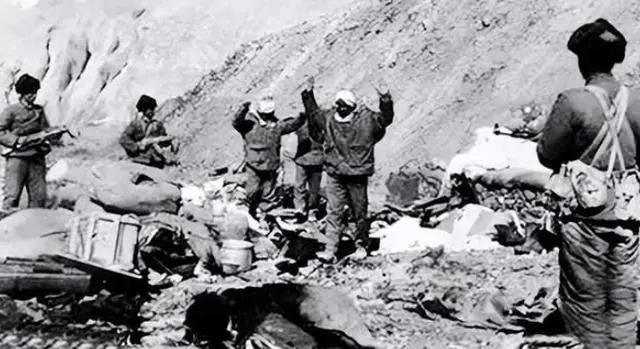
On the night of October 19th, 1962, more than 10,000 PLA soldiers entered the Sino-Indian border area from Tibet. In the middle of the night, with a cannon shot, the mighty counterattack against India began! Before the Indian Army could react, the Indian troops in the outer circle were destroyed, but then India deployed the Fourth Army Division, which they thought was very powerful. This unit had fought in World War II and was the most powerful unit in India. But in the eyes of China’s Army Commander, such a non-Socialist military Unit had no combat effectiveness, and he immediately said:
“It would take only one day to destroy an Indian Brigade!”
At that time, India certainly did not believe it! Nehru in New Delhi, India soon received the latest intelligence. When he saw the written content, Nehru himself was frightened and his face changed drastically! The battle report clearly stated that the PLA had destroyed an Indian Brigade in just one day, and General Zhang Guohua had not bragged. Indian officers found it unbelievable. Later, India bought advanced weaponsry from Western countries to bolster its confidence.
What will happen?
Even if India had weapons, it cannot beat China. In less than a week, The PLA reached the Tawang area. This important town that was once illegally occupied by India finally returned to the embrace of the Motherland. Until this moment, India came to its senses and found that it had provoked someone it should not have provoked. It is too late for the PLA to withdraw now. The PLA is advancing on all fronts – and is about to reach the Indian capital. The residents of New Delhi packed their luggage and prepared to flee overnight. The whole of India fell into panic. If they are not careful, they will perish. Fortunately, at a critical moment, China took the initiative to withdraw troops and cease fire, so the Indian capital did not fall. This battle was quickly over, and India and a number of Western countries were completely defeated. In the following 30 years, India no longer dared to call itself an Asian superpower – and it took them decades to recover.
After the Sino-Indian border counter-attack, India’s ambitions for Tibet had not been completely shattered. However, in the 21st century, after India recovered its vitality, it actually provoked trouble in China’s Tibet region once again. This matter of India’s behaviour is really puzzling. Why did India not learn its lesson after being beaten in 1962? It still wants to occupy Tibet. What good things in Tibet make India so concerned?
Reasons for Indian erosion of Tibet!
Indian troops invaded and gradually eroded the Tibetan region in 1951.
In 1962, India provoked trouble on the border and was repelled by China.
In 2020, India clashed with China’s Border Guards once again.
India always loses – but still wants to come again. Why?
There may be four reasons why India is still resentful about Tibet.
There have always been historical issues on the Sino-Indian border.
During the period when India was colonized by Britain, Britain unilaterally drew a border line, which obviously harmed the interests of China, resulting in 90,000 square kilometres of land being directly assigned to India.
China is not happy, but India is happy.
After India’s independence in 1947, it not only drew a clear line with Britain, but also continued to use the border line drawn by Britain. India believes that these more than 90,000 square kilometres of land originally belonged to India.
Because it wants to grab this land, India frequently attacked the Tibetan region.
Secondly, Western countries also play a role.
On the surface, Western countries support India, but in fact they want to use this to hinder China’s development and create divisions.
Tibet was relatively chaotic before liberation, with warlords, bandits and gangsters. It was better after the founding of the People’s Republic of China.
However, because the Tibetan region is closer to other countries, it has also become the best place for Western countries to infiltrate China.
Due to the instigation of foreign forces, some Tibetan border residents were instigated to rebel, and even collectively fled to foreign countries.
Their behaviour is exactly what the Western countries want. The Western countries have long predicted that as long as they stir up trouble in Tibet, they can hinder China’s development. It can be said that they can deal a heavy blow to China without much effort.
The Western countries do not want to do it themselves, so they secretly instigate India. India has become a tool of the Western countries and has invaded China’s Tibet region many times. This is actually helping the Western countries.
The third reason is also the most critical point, that is, the natural resources in Tibet are very rich.
The most prominent one is the water resources. The Yarlung Zangbo River and the Nujiang River both originate from Tibet and other places – whilst 86% of the water in the Indian Ocean comes from Tibet.
In other words, the water in Tibet flows to India and becomes India’s precious water resources.
Therefore, Tibet is also called the world’s water tower. The water here is particularly good and has always been. It can be purified for drinking and used for water conservancy projects.
India has hot weather and lacks water. India cannot find its own clean water – so it has set its sights on Tibet.
India frequently invades Tibet just to rob China of its water resources.
The summer in India is very hot. In order to cool down – Indians actually jump into the Ganges. It can be seen how important clean water is to Indians.
On the contrary, if Tibet is occupied by India, then China’s water source will also be affected. Because the water source in Tibet is very important to China, it accounts for a high proportion of China’s water sources.
Foreign media have made such comments as:
If Tibet is gone, drinking water in China may become a problem, and the Chinese may have to look at other people’s faces (seek help from elsewhere) to acquire water.
It can be seen that Tibet is an indispensable part of China.
Finally, in addition to rich water resources, Tibet also has many mineral resources. There are now seven huge deposits discovered, among which the content of the Qulong copper mine is as high as more than 10 million tons – the largest storage volume in the country!
In addition, there are 80 million tons of copper ore, more than 20 million tons of gold, and more than 30 million tons of lead and zinc ore, and the oil reserves are as high as 35 billion tons.
Turning these minerals into money would be a huge fortune, which is one of the reasons why India is eyeing Tibet.
In short, Tibet is a good place, and that is why China has to protect Tibet.
Defending Tibet is not just a matter for one province, but also a responsibility of the entire nation of China. It concerns the future of Tibet and the century-old rejuvenation of the Chinese nation.
Chinese Language Text:
为何印度总想霸占西藏?一旦西藏丢了,中国人连喝水都要看人脸色
中土历史
2024-07-08 18:34
河北
印度为啥老想霸占西藏?对此毛主席早有表态:
我想了好久都想不明白,为啥印度要打我们。
紧接着毛主席下达命令:
快扫它!
62 年中印干了一仗,让人纳闷的是,这之后印度还总想着占领咱们西藏。
听说要是没了西藏,中国人喝水都得看别人脸色。
西藏有多重要?印度为啥总惦念着?
印度强占。
1951 年,印度刚摆脱英国的殖民统治不久,就把黑手伸向了我国的西藏地区。
我国藏南的重要城市达旺被印度非法占据,并且,印度还私自决定将边境线继续向南推进。
结果就是,我国西藏地区因此损失了很多领土,其中有 12 万平方公里的土地都存在争议,究竟归谁,我国坚称是我国的,印度却说是他们的。
这事闹得很大,毛主席更是整天整宿睡不着,他想不明白:
为啥印度就盯着咱们国家呢?
让人无奈的是,当时我们国家正在抗美援朝,没办法分心去处理印度,结果藏南重镇就只能被印度占去了。
对于那 12 万平方公里存在争议的土地,毛主席的态度是:
以后有机会再细聊。
这一搁置,直接就到了 60 年代,谁也没想到,边境线拖得越久,印度就越嚣张。
1959 年,印度愈发过分,竟直接在我国边境开火,打伤了许多我国边防战士,导致中印边境局势骤然紧张。
这还不算啥,紧接着印度还警告我国,要求我国边防兵往后退 20 公里,边境一带不能开枪,巡逻、演习也都统统被禁止。
这么狂妄的要求,我们军队还是头一回碰到,就连毛主席都被吓了一跳。
印度地方不大,咋那么狂呢?还一出手就瞄准咱们西藏?
要是在 50 年代,印度之所以这么狂,可能是西方国家给它撑腰。
咱们国家建国后就没打仗了,但好多国家都把咱当最大的敌人,特别是苏联跟咱关系不好了以后,感觉最好的“兄弟”也跟咱疏远了。
西方国家觉得现在是对付中国的好机会,印度又是亚洲的新起之秀,想对付中国,就得先从印度入手。
要选个地方下手,西藏就很不错。
首先,西藏离印度很近,其次,西藏在解放前本来就势力复杂,在这样一个鱼龙混杂的地方制造一场动乱,是打乱我国阵脚的好办法。
因为这,在美国的牵头下,一些西方强国都纷纷力挺印度,除了在经济上援助印度,美国还提供了很多先进武器。
早些年印度被殖民的时候,啥好东西都没见过,如今突然得到欧美国家的认可,印度就开始飘飘然了。
狂妄的印度忘了自己有几斤几两,竟做起了亚洲强国的美梦。他们觉得中国落后贫穷,西藏地区自然资源丰富,还有干净的水资源,越想越羡慕,一怒之下,就对我国动手了。
1959 年,印度在我国边境挑起冲突后,行为愈发嚣张,先是在边境闹事,接着又蚕食我国西藏地区,一些边民不得不向后撤退。
瞧着印度愈发张狂,某些西方国家还在一旁瞧热闹,他们都猜咱中国不敢动手,可他们万万没想到,毛主席大手一挥:
快扫它!
印度结局如何?被占领的西藏又如何了?
第二,主席下达命令。
毛主席下令开打之前,很多国家都觉得咱不敢跟印度打。
咱国家在经济方面比不上印度。
在 60 年代,咱们国家经济情况不太好,才经历了粮荒,又加上抗美援朝的影响,才刚进入 60 年代,我国的士气其实不高,经济也需要恢复。
印度可不一样,它自称亚洲第一强国,在欧美的帮助下,大力修建基础设施,还从美国进口各种武器装备。
美苏的先进武器,其他国家很难制造,但印度却能轻松得到。
所以,我国在国际支持这方面,是比不上印度的。
最后来看看当时我国最大的困境,那就是美国和我国作对,这是大家都知道的。之前还有苏联这个铁杆兄弟,结果到了 60 年代,苏联撤走专家,也和我国对着干了。
咱们国家边境那旮旯,苏联屯了好几十万大兵,随时都可能打过来。
苏联在北,印度在南,都对我国虎视眈眈。一旦我国和印度开战,胜算很小。最关键的是,战争会给我国带来巨大损失。
边民没了家,这是一定的,没准还会影响到国家经济发展呢。
所以西方国家都不看好咱们国家,但他们绝对想不到,毛主席这次不想再惯着印度了,他把西藏军区司令员张国华找来,指着地图上的一个地方说:
快扫它!
命令太突然了,西藏军区的战士们都没反应过来,就赶紧去前线了,然后就是大量物资运输,军区一下子没那么多车,关键时刻,西藏的老百姓来帮忙了。
那些本来是用来运农作物的车,现在临时被我军战士借用了,他们带着百姓们的期望,正大批赶往边境地区。
1962 年 10 月 19 日夜里,1 万多名解放军从西藏进入中印边境地区。
半夜,随着一声炮响,对印反击战开打了。
印度人都还没反应过来呢,外圈的印军就被灭了,然后印度派了他们觉得特牛的陆军第四师,这支部队打过二战,是印度最厉害的部队。
可在我军司令看来,这样的队伍毫无战斗力,他随即表示:
一天时间就能灭掉印度一个旅。
那时候印度当然不信,然而没想到的是,一夜过后,印度新德里的尼赫鲁就收到了最新情报,当看清楚上面写的内容后,尼赫鲁本人直接被吓得脸色大变。
战报上清清楚楚地写着,我军只用了一天,就消灭了印度一个旅,张国华将军没说大话。
印度军官觉得难以置信,后来他们从西方国家买了很多先进武器,拿到武器后,印度又变得自信了。
那下场会怎样呢?
就算印度有武器,也打不过我们,不到一周,我们就打到了达旺地区,这个曾经被印度非法占领的重镇,终于回到了祖国的怀抱。
直到这会儿,印度才回过神来,发现自己惹了不该惹的人。
但现在退兵已经太晚了,我军一路高歌猛进,都快打到印度首都了,新德里的居民甚至都收拾好行李,准备连夜逃跑,整个印度都陷入了恐慌之中,一不小心就会亡国。
幸运的是,在关键时刻,我国主动提出收兵停战,印度首都才没有沦陷。
这一仗很快就打完了,把印度和一众西方国家彻底打服了。在之后的 30 多年里,印度再也不敢自称亚洲强国了,他们用了几十年的时间才恢复过来。
中印边境反击战结束后,印度对西藏的野心本应彻底破灭,但进入 21 世纪,印度元气恢复后,竟又在我国西藏地区挑起事端。
印度这事儿真让人纳闷儿,1962 年就被揍过,咋不长记性呢?还老想侵占西藏,西藏到底有啥好东西让印度这么惦记?
蚕食的原因
印度军队于 1951 年侵犯并逐步蚕食西藏地区。
1962 年,印度在边境挑事,被我国击退。
2020 年,印度又在边境和我国边防兵起冲突了。
印度总是输,还想再来,到底为啥呢?
印度对西藏耿耿于怀,可能有以下 4 个原因。
要知道,中印边境一直有历史遗留问题。
印度在被英国殖民期间,英国单方面划定了一条边境线,而这条边境线显然损害了我国的利益,导致 9 万平方公里的土地被直接划给了印度。
咱中国可不高兴,印度那家伙可乐呵了。
印度独立后,既与英国划清界限,又沿用了英国划分的边界线。印度认为,这 9 万多平方公里的土地本来就归印度所有。
因为想抢夺这片土地,印度才频繁对西藏地区出手。
其次,西方国家也起了作用。
表面上西方国家支持印度,实际是想借此阻挠我国发展,制造分裂。
西藏解放前比较乱,有军阀、土匪和流氓,建国后才好点了。
然而,因为西藏地区距离其他国家更近,所以它也成为了西方国家向我国进行渗透的最佳场所。
由于受到外国势力的蛊惑,一些西藏边境居民被策反,甚至还出现了集体出逃到外国的情况。
他们这一行为正中西方国家下怀,西方国家早就预测到,只要在西藏地区挑起事端,就能阻碍我国的发展,可以说,不用费什么劲就能让我国遭受沉重打击。
西方国家自己不想动手,就暗中鼓动印度,印度成了西方国家的工具,多次侵犯我国西藏地区,这其实是在帮西方国家做事。
第三个原因也是最关键的一点,就是西藏地区的自然资源非常丰富。
最突出的要数水资源了,雅鲁藏布江和怒江都发源于西藏等地,印度洋 86%的水源都来自西藏地区。
也就是说,西藏的水流到印度,就成了印度的宝贵水资源。
所以,西藏也被叫做世界水塔,这儿的水特别好,还一直有,既能净化了喝,还能用水搞水利工程。
印度天气热,还缺水,自己又找不到干净的水,就把主意打到了我国西藏。
印度频繁侵犯西藏,就是为了抢夺我国的水资源。
现在印度的夏天特别热,为了凉快一下,他们竟然跳到了恒河里。可以看出来,干净的水源对印度人有多重要。
相反,如果西藏被印度霸占了,那么我国的水源也会受到影响。因为西藏地区的水源对我国非常重要,它在全国水源的占比中是很高的。
外媒有过这样的评价:
要是西藏没了,咱们国家喝水都可能成问题,没准还得看别人脸色。
由此可见,西藏是我国不可或缺的一部分。
最后,西藏除了水资源丰富外,还有很多矿物资源,如今已发现的超大型矿床就有 7 个,其中驱龙铜矿的蕴含量竟高达 1000 多万吨,储存量全国第一。
此外,还有 8000 万吨铜矿,2000 多万吨金,以及 3000 多万吨铅锌矿石,石油储量更是高达 350 亿吨呢。
把这些矿产变成钱,那可是很大一笔财富,这也是印度对西藏地区虎视眈眈的原因之一。
总之,西藏地区可是个好地方,正因为这样,我国才更要保护好西藏这片土地。
保卫西藏,这不只是一个省份的事,更是我们全国的责任,这关乎西藏的未来,也关系到中华民族的百年复兴。
 SANGHA KOMMUNE (SSR)